Showing posts with label Learning. Show all posts

Friday, 24 June 2011

Mac Blues

 image from google

I'm only a recent convert to Apple/Mac. I can't say that I've embraced it with all my heart. Being used to Windows there were things that had to be unlearnt and new ones to get used to.

Like where they've placed those window minimiser/maximiser buttons at the top lefthand corner (yellow arrow in the pic below) and being teeny-tiny as well, is not very intuitive for righthanded users like me.


And then the Apple icon where you logout, shutdown, etc is also at the top lefthand corner of the screen sharing the menu bar of the currently active apps. Windows has its icon placed at the bottom left all by itself hence it's more prominent.

The other thing was the "delete" key. It's actually the Windows "backspace" key. Everytime you want to delete something you've got to take the cursor to the end of the word or phrase, which I find quite annoying.

There's more.

On my entry level Mac, they've  put in only 2 USB ports whereas on my Windows machine it had more USB's than I had uses for, plus a slot for SD memory sticks to transfer images and maps easily, but on the Mac - zilch :(


The other day I wanted to bluetooth-transfer an image from my ancient Samsung Omnia (that image on the left was googled). It had worked easy-peasy on the Windows but the Mac refused to connect with it. I had to research the forums and was surprised to learn that Bluetoothing with smartphones is a known issue with Mac OS. I mean like, really? The formidable Mac?


Anyway, a good samaritan shared his way of getting round the problem which I have copied below for my own future reference:

1) I opened the System Preferences.
2) Click on the Bluetooth icon.
3) A list of bluetooth devices that are paired with my laptop is reflected on the left.
4) I look for my Omnia or SGH-i900 (which was paired already before) and highlight it by clicking on it.
5) Look below the list for the "+", "-" and "" symbols.
6) Click on the symbol to reveal a drop down list.
7) Select "Show More Info" and the drop down list is modified to reveal more options. The drop down list will disappear.
8) Click on the again and select "Update Device Services". The Drop down list will disappear again.
9) You'll notice that the Omnia lights up and there is a connection.
10) At the same time (and quickly), click on the again and select "Connect to Network".
11) This time, the connection should hold and the Bluetooth PAN is up.

See how tedious it is, but I had to follow these steps as the Omnia's proprietary cable connector had long ago gone MIA.

A few good things I can say about the Mac, one of them is that it's  iTunes audio is very pleasing to hear, "fingering" the trackpad to this 50plus is also something rather cool, and most importantly,  it is known that buying proprietary products protects us somewhat from malicious hackers and viruses.

Oh well, as in any new relationship I've just got to get used to it's quirks.

Thursday, 16 June 2011

Do You Have A Back-up Language?

I know many people who are truly bilingual i.e they read, write, speak and think in two languages ever since childhood.

I also know a few who had tried to learn a third language a little later in life and managed to acquire a basic level of proficiency, one of them is my youngest daughter who learnt French for about three years at school. But on a short trip to France could barely make herself understood.

My eldest son, who studied formal Arabic up to SPM quickly picked up Jordanian street Arabic while doing his degree there.

They say the way to be proficient in any foreign language is to live among the native speakers and speak their language until it becomes a natural tongue.

I recently read that information about our native languages are stored in the left side of our brains, and that of languages that we are still learning or had mastered later are stored in other areas of the brain.

Why am I fascinated by this?

It is the realisation that an extra language can serve as a back-up communications tool should one happen to suffer damage to the left-brain and completely lose one's native language(s).

It happened to a 13 year old girl here: http://abcnews.go.com/Health/Wellness/teen-wakes-coma-speaking-fluent-german/story?id=10395859

It happened too to a friend who had suffered a stroke. He has reportedly lost his Malay and powerful English but is communicating now only in Thai, a language he was learning or had perhaps only just mastered.

I mean... seriously, though I do not wish it on anyone and certainly not on myself, a trauma to the left brain could leave us totally incapable of communicating to anyone.

But if we had been learning a new language prior to it happening,  this language might just kick in during recovery and help us be understood.

I'm thinking perhaps Mandarin, Tamil or even Javanese... there are many such speakers here in the Klang Valley

And also memorising more of Quran verses, for the Arabic capability......

I must reiterate, I do not wish brain injury on myself or even to anyone else, Na'uzubillah min zalik

Yes it is scary...  but hey, let's insure ourselves... just in case...


..

Saturday, 16 April 2011

Saturday TV

I accidentally watched some serious TV this morning.

I don't usually watch TV except perhaps the cookery channel or whatever whoever was in control of the remote was watching.

With 3 Banglas upstairs diligently transforming our boring beigy bedrooms into sensuous caves of "Lavender Print" and "Bouquet Orchid", I thought I might as well check out what's cooking on the Asia Food Channel.

That Pinoy chef "whats-his-name" was rolling out some apple strudels. It looks very easy to make and I love apple strudels and always order them for dessert when we "cafe/deli" out.  But then whenever I have apples in the fridge I think it's a crime to cut them up and cook all the vitamins away.

Flipping channels, "Crime and Investigation" caught my attention. It was showing a documentary about 2 kids involved in a  misadventure which started from an internet chatroom.

It was the year 2003 when chatrooms were all the rage. Teenagers (and not-so-teen internet-savvy) were making online friends  and gradually becoming addicted to communicating with one another for very long hours in this mode. (So what's so different with Facebook?)

John was an ordinary 16 year old, an only son of busy parents, who had made friends with 14 year old Mark, also an only child, in a chatroom for kids in Manchester.

Apart from Mark, John was also friendly with Rebecca, a teenage tease who often played on John's imagination and whom John had often arranged to meet in the flesh, but somehow the meetings never materialised.

Eventually Rebecca disappeared from the scene after being virtually killed off by an apparently  concerned Mark. The unassuming John remained friends with Mark and was actually becoming rather fascinated by his online capabilities.

His curiosity was answered when an older lady, Janet, a real-estate agent, made contact with John. It turned out that she was actually an undercover agent for The Crown, on a mission to recruit youngsters to groom them into the service. John's friendship with Mark was what had qualified him to be identified as an apprentice agent.

According to Janet, Mark was one of only two people who had access to an undersea vault which contained state secrets of the UK. The other person was the Queen.

As an apprentice, John's job was to protect Mark. He would be very well compensated financially... and sexually by Janet should he pass his assignments.

Every now and again Janet instructed John through the chats, to accompany Mark when he had to go somewhere like the dentist's or just hanging out, because of how valuable Mark was to the government.

With that kind of incentive, especially the non-financial, John was frequently with Mark after school.

One night Janet came online and said that John was doing very well indeed. His next assignment however was to be a big one - one that he would be paid 300 pounds sterling for in addition to some time with Janet herself.

He was to stab Mark...

The reason why was not revealed, only that he had to do it.

When they were out together that afternoon, John bought a kitchen knife, telling Mark it was for his mother.

Later on as evening approached, in a park somewhere in Manchester John stabbed Mark deeply in the stomach but called for an ambulance soon after.

The police then arrested John who told them everything about Janet and his recruitment into UK's Secret Service, confident that Janet would soon appear to vindicate him of his "crime". But she did not.

Mark had to spend some weeks in ICU recovering from his wound which was within an inch of being a fatal one. John was taken into custody.

Subsequent police analysis of John's computer hard-drives showed that John had been a victim of his own gullibility, believing that he was indeed marked out for a life of spying intrigue in the future. Someone, the police suspected a paedophile, had played on a teenage boy's fantasy.

And that someone, as police later discovered, was... Mark himself.

From his online interactions police investigators found that Mark had assumed about 190 different personas in the chatrooms, including that of Rebecca and Janet.

What gave him away was the regular use of a misspelling in each of his persona: instead of "maybe" he used "myebye".

What was puzzling though was why he had a death wish. This was something the documentary did not dwell upon.

John spent a year in remand before his case was brought to court.

At the end of the trial, John was acquitted. Thankfully the judge regarded the whole episode as something unfortunate to learn from and ruled that both John and Mark were not to see each other again, nor be allowed to be on the internet unsupervised and not to use chatrooms again.

I should think John and Mark are both young adults by now. I wonder how they are doing.

Is Mark instead of John being groomed for undercover duties?

Are they on Facebook? Or perhaps blogging?

Oh, American Idol now on Starworld.

Wednesday, 16 March 2011

How Time Flies 101

Take two balls - both the same weight but different sizes.

You then start them spinning using the same amount of force as possible.

The smaller ball will spin much faster than the larger ball, wouldn't it?

Let's say that the larger ball is Mama Earth BEFORE the 3 catastrophic quakes that occurred in the 2000's ie. Aceh, Chile, and Japan.

These quakes were the results of some of Mama's crustal or tectonic plates subducting one under the other.

When a section of one plate now lies below another, Mama becomes slightly smaller at that point - just like what happens when human mamas go get a little of their facial skin nipped and tucked behind their ears... their faces contracted and tightened up.

Let's say the smaller ball is Mama Earth AFTER the 3 quakes. Mama is now spinning faster than before.

When Mama spins a little faster, then one single rotation is now less than the 24 hours that we were used to before the quakes.

And the day is a teeny bit shorter, a few microseconds worth - but over a year how much is that?

There's another thing.

When the plates subducted, Mama's weight distribution became somewhat off-balanced, just like pregnant human mamas - as their pregnancies progress, they re-adjust their postures and walk differently.

Scientists say that when the 3 recent quakes Aceh, Chile and Japan happened, Mama's rotational axis shifted each time about 7cm, 8cm and 10cm respectively off linear.

Well, on the scale of Mama those are very, very, very, verrryyyy small.

But I wonder, had the first two shifts been enough to perhaps produce climate changes that had wreaked havoc in for instance, Queensland or closer to home, Kedah and Perlis where there had been floods like never before?

Come to think of it, pregnant mamas get weepy too sometimes.

Apparently Mama's rotational axis shift is permanent.

Well, so are those of human mamas who have been pregnant... right?

Here are a few links about the shifts:

http://news.nationalgeographic.com/news/2010/03/100302-chile-earthquake-earth-axis-shortened-day/

http://articles.cnn.com/2011-03-12/world/japan.earthquake.tsunami.earth_1_tsunami-usgs-geophysicist-quake?_s=PM%3AWORLD

Here's famous American physicist Michio Kaku's take on the same subject:

Saturday, 12 March 2011

Yet Another Tsunami

I thought we'd never get another devastating tsunami like that one in Aceh seven years ago when many places around the Indian Ocean were inundated taking away with it about 150,000 lives. When this recent one in the north-east of Japan happened, after an 8.9 undersea quake, it took many of us by surprise as it still seemed too soon after Aceh - whose quake registered at 9.2. Yes, these were humongous as far as quakes go.

Christchurch in New Zealand three weeks ago experienced a second, albeit weaker but more catastrophic jolt barely five months after being shaken with a 7 pointer last September. This too seemed too close for comfort for me especially because of the fact that I had just then returned from a splendid motoring holiday with hubby and eldest daughter around that region of New Zealand.

And by the way, only in the last fortnight my second son the airline pilot had flown to Sendai airport - which was badly affected by the tsunami - so excuse the goosebumps please.

Yesterday we watched footages of the devastation on the Japanese channel, NHK, and had the opportunity to observe it's role in disaster management. Information and instructions were aired in an unemotional manner and translated into many languages including English, Mandarin and Korean. They say the Japanese are a stoic lot but whose to know what worries were going on in the broadcasters' minds, as they were going about their national duties.

(added on 24th March 2011)

Like I said, there seemed to be a lot of jostling of Mother Earth's plates in the last few years. And where tsunamis are concerned, according to Wiki, there have been about as many in the last decade as there had been in the fifty years prior to the year 2000 as per the list I've copied-pasted below:

(from http://en.wikipedia.org/wiki/Historic_tsunamis)

  • 6 - 1950–2000
    • 6.1 1952: Severo-Kurilsk, Kuril Islands, USSR
    • 6.2 1958: Lituya Bay, Alaska, USA
    • 6.3 1960: Valdivia, Chile
    • 6.4 1963: Vajont Dam, Monte Toc, Italy
    • 6.5 1964: Niigata, Japan (新潟地震)
    • 6.6 1964: Alaska, USA
    • 6.7 1976: Moro Gulf, Mindanao, Philippines
    • 6.8 1979: Tumaco, Colombia
    • 6.9 1983: Sea of Japan (日本海中部地震)
    • 6.10 1993: Okushiri, Hokkaido, Japan (北海道南西沖地震)
    • 6.11 1998: Papua New Guinea

  • 7 - 2000s
    • 7.1 2004: Indian Ocean (Aceh)
    • 7.2 2006: South of Java Island
    • 7.3 2006: Kuril Islands
    • 7.4 2007: Solomon Islands
    • 7.5 2007: Niigata, Japan (新潟県中越沖地震)
    • 7.6 2009: Samoa, Pacific Ocean
    • 7.7 2010: Chile
    • 7.8 2010: Indonesia
    • 7.9 2011: New Zealand
    • 7.10 2011: Pacific coast of Japan

My daughter wondered whether Malaysia could experience quakes and tsunamis too. We did have tremors from the Aceh one, didn't we? And had our share of damage from the ensuing tsunami in Penang. Going by the prolific activity around the so-called Ring of Fire of late, dare we expect the whole Eurasian Plate on which Malaysia sits to somehow tilt over and under the Pacific Plate? And we awake from a night of sleep to a sunrise in the west?

Brrrrrr....... banish the thought!

Here's a map of the world according to it's crustal plates:

From http://geology.about.com/library/bl/maps/blcrustalplates.htm

"The Earth's outer layers are organized into about a dozen great pieces, called lithospheric or crustal plates—although "shells" is a better name when you realize that they're all curved, not flat. The interactions of these plates, and how they recycle most of the lithosphere over the course of geologic time, are what plate tectonics is all about. In addition to these major plates, there are another dozen minor ones or microplates.

Beneath the plates is the upper mantle. The top part is softer than the the crust above or the mantle below, and that layer is what allows the plates to move without stirring up the deep mantle."

What an amazing planet we live in - so beautiful and so alive!..

Tuesday, 18 January 2011

A Passport To Renew

If you were travelling overseas in the 80's you'd have to budget about a week for renewing your passport if it had lapsed or was approaching expiry. One week was for straightforward cases only. Sometimes the Immigration officers were finnicky about something or other, then you'd have had to return another day with some documents like your father's tattered and flimsy colonial era birth-certificate - as had happened to me.

Well, it really helped that I knew the head-honcho at the time was (and still is, by the way) blissfully married to my father's cousin and that he could certainly vouch that my father was 100% Malaysian true and true, and that my application should have been approved without any question at all. After all they had issued the passport in the very first place, so why make a hassle of renewing it? My uncle (in-law) welcomed me with his ever-charming smile and did the necessaries. As I handed my application-form back to the officer said "Your passport will be ready for collection after one week".

Thirty years on, with biometrics technology and computerisation, you can get your passport renewed in a couple of hours only. If you are savvy enough and above 18 years of age, you can submit your application and make the payment via the self-service kiosk located outside the public area. Kiosks are great because they do not flip through the pages of your passport to see where you were born and then decide that you should submit proof that your father is a Malaysian.

Thing is, the machine will do a match of your live fingerprint with that in the passport and I suspect, your MyKad as well. If they do not match (as didn't mine due to the unreadability of my thumb whorls), then go right ahead and join the queue at the information counter to have your application form checked and be assigned a queue number.By the way, hand in a photocopy of your MyKad as well.

Then settle in with an interesting book or just people-watch until your number gets called, at which time quickly proceed to whichever counter the voice told you to go to. There you will have your fingerprint verified against the one in the passport and your MyKad so the computer knows that it's you who has come and not your sister who is your exact replica (like the officer couldn't tell from my photograph).

Anyways you then wait a while more for a cashier to bellow out your name so you could part with your cash - RM100 for 2 years or RM300 for 5 years. I opted for the latter since the kiosk didn't like me and I don't feel like making frequent trips to the passport office.

"Your passport will be ready for collection in about one hour" said the cashier. And so you go and lepak somewhere for that duration while they do things like scanning in your photo into your passport.

I had gone to the Shah Alam office which opens on Sunday mornings till 1pm. It's in Wisma PKNS. Some shops were already opened for business at 10 am and I took the opportunity to have brunch at one of the restaurants there.

Nearing one hour you go back, place your number in a basket at counter no. 1 and wait to get called to sign for your brand new passport.

You shall then marvel that though they may give you a shiny new passport, they certainly know how to age you by 10 years in the scanned photo. As you leave the premises you check your reflection in the nearest sliding door to see if it's true.

Friday, 26 November 2010

OILIES...

Without realising it, I think we have struck oil - in my household that is.

We have oils in the kitchen, oils in the bathroom, oils in the bedroom.

In my kitchen pantry I have our regular cooking oil - Malaysian palm, almost always Seri Murni, sometimes Knife brand. There's  Beta-Carotina Oil which hubby sometimes mixes with his budu as a salad dressing. I use it occasionally to saute diced tempeh which I snack on. Mostly I use olive oil for this, I love the "lemak" flavour of tempeh after being sauted with extra virgin olive oil.

There's also toasted sesame oil. I only use it in my recipe for Ginger Beef which is a family favourite. When my daughter cooks her fusion Spaghetti Bolognaise she drops a teeny bit of it in the sauce which she has also had sauteed some dried chillies.

And then there's a small bottle of virgin coconut oil which I used to swallow a teaspoon of every night before dinner, but I can't remember what for.

You can also find the untoasted sesame oil in my bathroom. I had read that sesame oil is effective as a medium for oil-pulling. That is you use it is as a kind of gargle to detoxify your mouth and teeth with. Some people swear by it. You can read about it here.

I see a small bottle of oil with a picture of an Indian lady on the label. I'm not sure how long it has been there but I don't think I have ever used it as it smells a little rancid. Will be chucking it out soon.

Let's see what else is there. AHA! My favourite massage oil - also that of my masseuse. Based on sunflower oil, it is transparent and has floral overtones, obviously. My masseuse used to smother himself with this every time he stepped into the sauna until someone else said that the oil can cook your skin in the heat of the sauna. Now he uses Vaseline instead and I don't think he can scratch a line on his arm with his nail any longer.

On my cluttered dressing-table in the bedroom, there is an unopened bottle of nutmeg oil, also unopened is a bottle of ginger oil. These are purportedly for joint aches and pains, which I am happy to report we have not had to use to date.

Did I say I have virgin coconut oil (VCO) in my pantry? Well I also have some on my dressing table. Lately I have taken to use this oil quite liberally. It is excellent as a facial moisturiser. After rubbing my face with it, I run my fingers through my crowning glory leaving the traces of oil there which makes it easier to brush. It leaves a shine too and black looks even blacker.. hehehe.

I apply VCO on my feet as well when they feel dry and ravaged, in fact you can use it on any dry patch that you might have and it's incredible how nice and soft the area feels after. It's a really marvelous oil but it has to be virgin pressed and you need to get a good quality brand.

So those are the oils I have around my house. What's absent is the aromatherapy ones. Perhaps I'll get one to make the bedroom smell nice after the nightly onslaught of Shieldtox spray. Maybe then I might go to bed earlier than my usual time.

Anyhow, if anyone's interested I've copied-pasted here the Earth Clinic page about VCO. It seems to be some kind of miracle oil and I guess that was why I took to drinking that nightly teaspoon.

"We found the following information from various sources over the internet:
You can take coconut oil both internally and externally. Those who are proponents of this cure do both. The typical amount to take internally per day is 3 TBSP. It is recommended that you take 1 TBSP with every meal. Coconut Oil apparently gives an instantaneous energy lift and may help you give up caffeine! Many sports nutrition bars and drinks include coconut oil for its energizing properties.
Warning: Coconut Oil is contraindicated for those with hypertension / high blood pressure! But if you suffer from low blood pressure, this is a great remedy for you.
Lots of research has been done on the subject of Fatty Acids and Monogycerides (found in coconut oil). Some of the reported cures from research are:
WEIGHT LOSS:Promotes loss of excess weight by increasing metabolic rate. Is utilized by the body to produce energy in preference to being stored as body fat like other dietary fats. Helps prevent obesity and overweight problems.
SKIN/HAIR/BEAUTY
Applied topically, helps to form a chemical barrier on the skin to ward off infection; Reduces symptoms associated with psoriasis, eczema, and dermatitis; Supports the natural chemical balance of the skin; Softens skin and helps relieve dryness and flaking; Prevents wrinkles, sagging skin, and age spots; Promotes healthy looking hair and complexion; Provides protection from damaging effects of ultraviolet radiation form the sun.; Helps control dandruff.

VIRUSES/BACTERIAL INFECTIONS/FUNGUS/PARASITES
Studies have found that coconut oil can kill viruses that cause influenza, herpes, measles, hepatitis C, SARS, AIDS, and other illnesses. It also kills bacteria that cause ulcers, throat infections, urinary tract infections, gum disease and cavities, pneumonia, and gonorrhea, and other diseases; Kills fungi and yeasts that cause candidiasis, ringworm, athlete's foot, thrush, diaper rash, and other infections; Expels or kills tapeworms, lice, giardia, and other parasites;

Coconut oil may provide an effective defense against many parasites including giardia. Like bacteria and fungi, giardia can't stand up against MCFA found in coconut oil. Research has confirmed the effectiveness of MCFA in destroying giardia and possibly other protozoa. By using coconut oil every day, you may be able to destroy giardia. Another possible use for coconut is for the removal of intestinal worms. In India it has traditionally been used to get rid of tapeworms. In one study it was reported that treatment with dried coconut, followed by magnesium sulfate (a laxative), caused ninety percent parasite expulsion after twelve hours. In India coconut oil is also rubbed into the scalp as a treatment to remove head lice.
CHRONIC FATIGUEBy taking coconut oil daily, you may also be eliminating the possibility of developing food allergies, chronic fatigue, and other related symptoms. If you're currently troubled with these conditions, coconut oil used liberally with meals may provide a source of relief. Because MCFA are quickly absorbed by the tissues and converted into energy it seems logical that those suffering from chronic fatigue would gain a great deal of benefit.
DIGESTION:Coconut Oil provides a nutritional source of quick energy; Boosts energy and endurance, enhancing physical and athletic performance; Improves digestion and absorption of other nutrients including vitamins, minerals, and amino acids; Improves insulin secretion and utilization of blood glucose; Relieves stress on pancreas and enzyme systems of the body; Reduces symptoms associated with pancreatitis; Helps relieve symptoms and reduce health risks associated with diabetes;
BODY/ORGANS
Coconut Oil reduces problems associated with malabsorption syndrome and cystic fibrosis; Improves calcium and magnesium absorption and supports the development of strong bones and teeth; Helps relieve symptoms associated with gallbladder disease; Relieves symptoms associated with Crohn's disease, ulcerative colitis, and stomach ulcers; Improves digestion and bowel function; Relieves pain and irritation caused by hemorrhoids; Reduces inflammation. Supports tissue healing and repair; Functions as a protective antioxidant; Helps to protect the body from harmful free radicals that promote premature aging and degenerative disease; Helps relieve symptoms associated with chronic fatigue syndrome; Relieves symptoms associated with benign prostatic hyperplasia (prostate enlargement); Reduces epileptic seizures; Helps protect against kidney disease and bladder infections; Dissolves kidney stones; Helps prevent liver disease; Supports thyroid function;

CANCER:Helps protect the body from breast, colon, and other cancers;
HEART:Is heart healthy; improves cholesterol ratio reducing risk of heart disease; Protects arteries from injury that causes atherosclerosis and thus protects against heart disease;
TEETH:
Helps prevent periodontal disease and tooth decay.

COCONUT OIL FOR POOR CIRCULATIONDo you feel cold much of the time? You might try coconut oil, which is said to increase body temperature (and blood pressure). This is due to increased metabolic rate as medium-chain fatty acids of the coconut oil are burned.
CURE FOR ATHLETE'S FEETThe 8% caprylic acid in coconut oil is said to be effective against fungus, and on skin conditions like planter's warts and athlete's foot.
CURE FOR ROSACEA
Used externally and internally, we read one report on the internet of a 15-year bout of rosacea clearing up within 2 weeks with Coconut Oil!"


____________________________ 


Friday, 12 November 2010

Homicide. Suicide or Misadventure?

Check out this story of a bizarre death from  http://darwinawards.com whose "macabre awards commemorate people who eliminate themselves from the gene pool by masterminding idiotic misadventures"


____________________________________________________________

At the 1994 annual awards dinner given for Forensic Science, AAFS, President Dr. Don Harper Mills astounded his audience with the legal complications of a bizarre death. Here is the story:


On March 23,1994 the medical examiner viewed the body of Ronald Opus and concluded that he died from a shotgun wound to the head. Mr. Opus had jumped from the top of a ten story building intending to commit suicide. He left a note to that effect, indicating his despondency. As he fell past the ninth floor his life was interrupted by a shotgun blast passing through a window which killed him instantly.

Neither the shooter nor the descender was aware that a safety net had been installed just below at the eighth floor level to protect some building workers and that Ronald Opus would not have been able to complete his suicide the way he had planned.

"Ordinarily," Dr. Mills continued, "a person who sets out to commit suicide and ultimately succeeds, even though the mechanism might not be what he intended, is still defined as committing suicide."

That Mr. Opus was shot on the way to certain death, but probably would not have been successful because of the safety net, caused the medical examiner to feel that he had a homicide on his hands. 

The room on the ninth floor, whence the shotgun blast emanated, was occupied by an elderly man and his wife. They were arguing vigorously and he was threatening her with a shotgun. The man was so upset that when he pulled the trigger he completely missed his wife and the pellets went through the window, striking Mr. Opus.

When one intends to kill subject A but kills subject B in the attempt, one is guilty of the murder of subject B. 

When confronted with the murder charge the old man and his wife were both adamant. They both said they thought the shotgun was unloaded. Thed old man said it was his long-standing habit to threaten his wife with the unloaded shotgun. He had no intention to murder her. Therefore the killing of Mr. Opus appeared to be an accident; that is, the gun had been accidentally loaded.

The continuing investigation turned up a witness who saw the old couple's son loading the shotgun about six weeks prior to the fatal accident. It transpired that the old lady had cut off her son's financial support and the son, knowing the propensity of his father to use the shotgun threateningly, loaded the gun with the expectation that his father would shoot his mother. 

The case now becomes one of murder on the part of the son for the death of Ronald Opus.

Now comes the exquisite twist. 

Further investigation revealed that the son was, in fact, Ronald Opus!

He had become increasingly despondent over the failure of his attempt to engineer his mother's murder. This led him to jump off the ten story building on March 23rd, only to be killed by a shotgun blast passing through the ninth story window. 

The son had actually murdered himself so the medical examiner closed the case as a suicide.

__________________________________________________________


To think that the poor old man could have ended up actually killing his wife with the loaded gun, had this not happened
 

Thursday, 28 October 2010

This Is About Nothing

Zero means nothing, and nothing is no thing. You can't count nothing because there's no thing to count. Cavemen didn't need to count much so they got by by scratching a few short vertical lines on cave walls to do their additions and subtractions.  Later on men realised the enormity of having to count lines and so they devised numerals to denote quantities. I would guess that most ancient civilisations used groups of 10 as their counting base, as per the number of fingers on a man's hand.

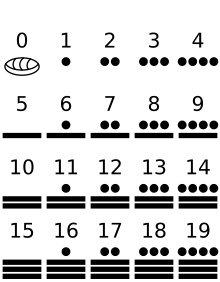
The Mayans however used 20 as their grouping factor - perhaps they were nimble with their toes as well. Imagine if we had 20 different numerals in our numbering system, we would have learnt to sing "One little, two little...... TWENTY little Mayan boys" in our toddlerhood. And that might not be a bad thing, perhaps we would have started using a lot more of our brains early in life. Also, if grouped in twenties, number symbols won't be repeated as often as groups of ten, so if you are 50 plus of age as I am, in a base of twenty, 50 would be only 25.

It is said that the Mayans were the first to see the need for a symbol to denote zero. It is shaped like an eye. In fact it is interesting how the Mayans represented numbers, with dots and bars.

from http://en.wikipedia.org/wiki/Maya_numerals


The Arabs however took the bars and placed them vertically, diagonally, horizontally and with a couple of round shapes, designed their numerals. I think their representation of zero is the most efficient. You see, if you need to symbolize nothingness, a void, you'd use something that takes up no space, wouldn't you? Why not a little dot? And that is exactly what the Arabs have used, and I think that's brilliant.

 from http://en.wikipedia.org/wiki/Arabic_numerals


Unfortunately, although modern civilisation adopted the Arabic numbering system, the numerals themselves did not catch on. Westerners probably did not like the squiggly look of Arabic script including it's right-to-left orientation (but numbers are written from left to right). But they liked how the Indians symbolised zero. If you look at Hindi and Tamil scripts, you can see how curly-wurly the writing is. Yes, it seems that they have taken the Arabic dot and extended it into a little circurl which was subsequently adopted by the West.

The Chinese however have nothing round in their characters from my observations, they are mainly lines fashioned into mini pictures that fit into square boxes.


from lotsasplainin.blogspot.com

Although it sounds pretty cute - "ling", the character for zero looks complicated.

I would reckon doing maths with pictures can get tedious and I suspect that's why the Chinese too are now using the Arabic numbering system. Combined with their skills on the abacus it was hard to beat the Chinese at arithmetics in my day.


Sometimes I just wonder at how different races developed their scripts those long years ago. To a certain extent the styles seem to reflect the way they sound too - most obvious is the Indian roly-poly pronunciation that kind of corresponds with the curly-wurly letters. You'd probably be able to imagine Arabic guttural staccato emanating from their squigglies. And It's not too difficult to associate Chinese sing-song style with the swishy lines of their boxed-in characters - which perhaps also account for the difficulty with rolling their R's.

We Malays have no script to call our own, being accommodating by nature, we use what is plonked upon us by whoever had conquered us. It shows when we speak Malay to a non-native speaker, we tend to pick up the way they sound and speak in the same manner. For example using "lu" and "gua" with a Chinese, or saying "kaloo" instead of "kalau" with a Tamil, even with Indonesians we would go "bagimanaa ini Pak" instead of "macam maner ni" as is usual.

Interestingly though when I was shopping in Singapore one day in the ninety's, a Malay promoter named Yati told me about a "jeeloh" percent interest on something or other in thick Chinese accent. "Jeeloh"? I asked. "Yes, worr.." said she.

I must have looked very much like an Ah Soh.

Oh yes, about zeroes. We have taken them for granted after centuries of use but think how awkward it would be had the Roman empire not implode and we would have to calculate with  letters - and no zero. 10 is X. 50 is L. 100 is C. 1000 is M.

How would we ever write a cheque for Rm1.7 trillion?

How would we even show Zero percent?


Though Zero is nothing it's still a big deal.

Monday, 25 October 2010

It's a Puzzling Post

It begins with three of us, hubby, Munie and I going back to Taman Arboratum in the Kiara hills yesterday morning - after a 6-month hiatus.

Noticed that a few new signboards had been put up along the tarmac path.

The first says that the park is now under the purview of the National Department of Landscapes.


That was since 1st August 2010. Good news indeed and about time too.

This place was slated for a luxury hillside residential development and is nestled between the Taman Tun Dato' Ismail Recreational Park and the sprawling KLGCC Golf Course.

It would have been a very desirable address to live in and to coolly mention to the curious.

Although roads and drainage are  already in place,  nature lovers of TTDI and the surrounds have managed to stop the project.

Yesterday in full throng, exercisers descended on this place and then ascended the sometimes steep inclines for a vigorous workout.

Hubby did three and a half circuits, Munie two.

I cheated and went the opposite direction which is mainly downhill for one round.

Still  huffed and puffed in places and worked up a sweat.

They had erected a signboard where Sg. Pencala originates and also one  further downstream cautioning people about polluting the stream or introducing aquatic animals there.


Came across this flower in full bloom. Am hopeless where flora is concerned and have no inkling what it is.


Bumped into a friend... Suzy, and exchanged pleasantries.

I took the "strolling" theme further by finishing my single round and then buying the Sunday papers at the end of the trek.

I plonked on the seller's plastic stool to read while waiting for the other two to be done with their masochistic acts.

And there I undertook my own route for pleasurable pain - the CRYPTIC crossword puzzle!

Years ago, before marriage and baggage, I used to tackle the one in the New Straits Times.

It was taken from the Daily Telegraph and was of course British-oriented with clues that refer to very British icons like the Queen, their political parties, the British Rail, or the Tube, or even plain tea.

But the one in the Sunday Star is on general knowledge and you can almost always find the answers in the clues themselves.

That's what makes cryptic crosswords so enjoyable. rather than the straightforward ones for which you must possess a wide vocabulary or a Roget's Thesaurus at hand.

Take this cryptic clue:

Further chaos in Laos (4 letters)

I bet word pundits like those I have on Facebook will instantly spot the answer to be the word "ALSO".

It has nothing to do with  Laos the country, except the letters.

"chaos"  indicates a jumbling up of the letters that make up the answer. If you re-arrange the letters L.A.O.S, you get "ALSO" which is a synonym of "further" which is the answer.


Here's another one:

He could be in Madrid and Paris at the same time (8 letters)

The answer is neither a super-hero nor a cartoon character. Since Madrid is in Spain, the clue may be referring to a Senor, but if you can spot that "and Paris" is an anagram of "Spaniard", then you can be 99% sure that that is the correct answer.

Fun isn't it?

Anyway, those were the only two clues I managed to solve while waiting for my super-heroes.


How about this one?

Is afraid of disturbing adders (6)

(I'm not giving the answer)

Actually none in my family have taken to crossword puzzles like I have.

I'm also the only one who enjoys diabolical Sudoku.

Am I nerdy or what?

Sudoku was very popular when it first came out.

Although it has nothing to do with calculating anything, some people are put off by the numbers in the puzzle.

Actually it's just about  pattern recognition - and putting symbols in their rightful places.

The reason the puzzle designer used numbers in the first place is probably because everyone knows them and thus will have universal appeal.

Speaking of numbers, when I first went to school, they taught me to say

Nought, One, Two, Three, Four, Five....

Then Nought became Oh as in "Agent Double Oh Seven" or "Peejot (Peugeot) Five Oh Five".

Was it in Form Four when Oh evolved into Zero with maths teacher droning "when dee y dee x tends to Zero... ba,bla,bla...".

Now they tell me zero is not a number... it is a concept, and you can go from zero to hero!


OK... I'm not sure what this posting is about. Hence the title.

Friday, 20 August 2010

Of Mutants and Agents


Remember the Teenage Mutant Ninja Turtles?

Well, they were GOOD mutants, weren't they?

We all know that turtles become slow beings when they reach turtle-adulthood, and even when they are in their turtle-teens, they would have slowed down alot from when they were turtle-babies.

So how could they have become fast-moving ninjas fighting urban crime, alien invaders etc.?

Well, what happened was some part of the DNA in their cells mutated.

Changed in form, that is.

So what is DNA? Well, I haven't seen it for myself really but they say it's something in our cells that looks like a spiral staircase. Somehow this spiral entity stores all the information - the genes -  that defines each one of us as a creation of God.

I have straight hair because that's written in my DNA - I have the straight-hair gene.  I will have wavy hair only if the straight-hair gene mutates into a wavy-hair gene. Which can't be bad if I have the face to go with it but it doesn't really matter much either.


Mutation can be good however, in particular when it helps the mutant cope with his environments eg. colder winter temperatures, or thinner air or even life in the New York sewers, for the ninja turtles.

Sometimes though mutation can be bad. This happens when the body does not adapt well to the change and may then become susceptible to serious diseases, like cancer.

Remember the atomic bombs on Hiroshima and Nagasaki? And the Chernobyl nuclear fall-out? The radio-active material from these blasts caused mutations on a mega scale.

But please do not think that we are safe from such hazards.

Mutations can also take place without us knowing.

Sometimes substances present in what we consume can cause genetic mutation.

Like undercover agents, these substances work invisibly as agents of mutation. They are called mutagenic substances. They cause genes to mutate.

So if we consume substances that are mutagenic, they may cause mutation in certain genes that have already adapted well to our body chemistry.

Oh yes, CANCER. The big C.

We have heard of carcinogens, haven't we? Those substances that can cause cancer?

They are in fact agents of cancer. Nicotine in cigarette smoke is an example.

Interestingly there are hard-core smokers who live well into their nineties without getting cancer. I believe it's because they have genes that have adapted to the smoky, tarry environment within their lungs. And I believe that they are the exceptions to the norm.

And I believe for many smokers, this protective gene(s), in the course of time mutate, due to the actions of certain mutagens in the body which are present by way of exposure to or consumption of mutagenic substances...

...which results in the body becoming susceptible to the carcinogens in cigarette smoke which is when the smoker may contract cancer.

What should be good for such smokers then (and also for the unfortunate people exposed to secondary smoke) is to consume agents that can PREVENT the mutation of their protective genes, so-called  ANTI-mutagenic substances.

Apparently, anti-mutagens exist. Take Japan, it is a nation of heavy smokers but it has one of the lowest rate of cancer occurrence in the world. (And the most ninjas?)

Anyway that, is my over-simplistic layman understanding of mutagens, carcinogens and anti-mutagens.

And why do I find them interesting?

It's because in the course of my looking-up on sirih (betel-leaf in English) for my previous post, I came across a  blog run by a Malaysian herbalist, it's called Sembang-sembang Herba.  The herbalist had argued that both sirih and it's accompaniment pinang (areca-nut) DO NOT cause cancer as is widely believed, based on their anti-mutagenic and non-carcinogenic properties.

Do go there, have a read and you'll learn that sirih and pinang are in fact anti-ageing too - just short of being aphrodisiacs. You'll learn an age-old secret or two there as well.

Another thing I came across is that the Burmese word for sirih is kunya and isn't it surprising that that is also the Malay word for "chew", chewing being the only way to enjoy sirih!

As to the query whether there is anything for women that works also on men, below is an excerpt of an article, also by the same herbalist.

"Herbs Suitable for Women may be Disastrous for Men


For men only.


Use the following herbs with cautions:


Stop taking them if you notice sign of breast enlargement: Saw Palmetto (anti-androgen), Fennel , Aniseed , Kacip Fatimah, Fenugreek, Licorice, Yucca, Pomegranate, and Red Clover .


However, not all herbs, commonly taken as food which contain estrogenic phytochemicals bring about breast enlargement effects (in both sexes) including banana, tomato, pomegranate, fenugreek, parsley, carrot, dill, onion, garlic, alfalfa, mungbean, oregano, fennel, aniseed, grapefruit, tarragon, soy."

OK, you may read further here

It was my hubby Red Alfa who made the above query, as he had discovered to his detriment how painful it was to over-indulge on soy-based protein supplements.

Back in the days (circa 2003) when he had just started bench-pressing in our bedroom, drinking protein supplements was part of his regime. Most sold on the market were whey-based, which he couldn't handle due to lactose intolerance which comes with having javanese roots and  by virtue of which soy would be a natural choice, so we thought.

And so he bought soya protein  at the pharmacist's a carton at a time and consumed them with relish.

But it was only when he started getting headaches akin to PMS migraines which made him demand a head scan at the hospital which revealed nothing, that we came across some information on the internet about the pre-cursors of estrogen that are present in soya that had affected him. Estrogen are female hormones and a true man wouldn't want to mess up his system with them. Fortunately they had only given him headaches and a new respect for women who suffer them. I'm not sure though whether any genes had mutated.

But tauhu, tempeh, and taucho do not have the same effect because of the fermentation process that the soya beans have been subjected to produce them. So it was a lesson learnt the painful way for hubby, who still has this habit of experimenting much too whole-heartedly with foodstuffs until they become "poisonous" to his body. Like eating menglembu groundnuts (read protein) by the packets every night after dinner until his gout played up. Or drinking UHT milk by the jugs until a trainer at the gym commented on his belly saying "AHA! YOU HAVE BEEN DRINKING MILK!" And now experimenting with mixing vegetable and fruit juices into yogurt and milk - and he seems to be tolerating that so far.

Here and here is where you can read up on the unwanted effects of soya - the question of which is an on-going controversy in the West actually.

Thanks for making it till the end of this post, do have a good weekend and for Muslims, it's the next 10 days before the last 10 days of Ramadhan, may it be good for you, Insya Allah.

Monday, 16 August 2010

Discovering Herbs Malaysiana - Part 2


Pala is nutmeg. Somehow Penang has become THE place to buy nutmegs, whether the preserve or the liniment oil. Some health effects (copied in whole from http://www.indepthinfo.com/nutmeg/health-effects.shtml ):

  • "One of the interesting health benefits of nutmeg oil is its ability to stimulate the brain - it relieves stress and stimulates mental activity. It is even reputed to stimulate dreams. The ancient Greeks and Romans used it as a brain tonic despite the fact that it was quite rare and costly.
  • Nutmeg is known to have anti-inflammatory properties and can be used to treat joint and muscle pain. The oil works particularly well for this when it is massaged into the affected area. It is an integral herb in Chinese medicine where it is used for stomach pain and inflammation as well as reducing joint swelling.
  • In wholistic medicine it is considered an excellent liver tonic which can help remove toxins. Nutmeg oil is also a good herb for the kidney, helping it dissolve kidney stones as well as relieve infections.
  • Many believe that heart problems may also be alleviated by nutmeg, as it can help increase blood circulation and stimulate the cardio-vascular system. It is also good for digestion, getting rid of both gas and stomach aches and relieving vomiting, diarrhoea, and flatulence as well as encourage appetite.
  • Nutmeg can also help with respiratory problems such as a cough from the common cold. It is often found as an ingredient in cough syrups. It is also said to be able to help with asthma. However, this remains unsubstantiated by research.
  • While there are many health benefits of nutmeg, be careful not to take it in high doses. It can be toxic and can cause serious problems. Never consume more than 30 grams (around 6 tablespoons) in a day, and even this amount would be considered excessive."


Senduduk Putih is said to have high medicinal value and have been used to treat long-term coughing as well as delayed speech development in children. Including the usual diarrhoea and leucorrhea. A reader at http://www.melur.com/myherba.asp?plant_id=171&cat=HERBA shared this tip:

 "Senduduk putih liar yang tumbuh dalam hutan lebih baik untuk perubatan tp susah nak cari..senduduk memang bagus untuk kesihatan. dulu arwah ayah saya tak dapat jalan selama 1 tahun sb sakit sendi dan urat..ada orang bagi petua buat jus daun senduduk putih,senduduk merah dan senduduk gajah..blender semua daun tu dan minum 3 kali sehari..sebelum minum tu selawat 3kali dan niatlah kita minum jus tu untuk menyembuhkan penyakit..alhamdulilah setelah 2-3 bulan amal minum jus daun senduduk ayah saya boleh jalan semula..daun senduduk juga boleh ubati luka2 kecil dengan cara mengumpal daunnya hingga keluar air dan sapu pada luka.insyallah sekiranya kita berusaha pasti Allah akan sembuhkan penyakit kite..tak salah rasanya sy kongsi petua berharga ini demi kebaikan bersama..jangan pandang remeh pada pokok senduduk kerana masih banyak lagi khasiat yang belum kita ketahui."


 Limau Kasturi is just one of the many varieties of limes we have in Malaysia.  The other ones I know are limau nipis and limau purut, but with sambal belacan, limau kasturi is the limau of choice.  This reader shares how and why she uses limau kasturi:
"Saya amalkan minum bersama teh hijau 2 kali sehari, selain dapat menghalang kanser, mengandungi anti oksidan yang banyak, menguruskan badan, menghilangkan bau badan, ubat sembelit dan yang pasti mencantikkan kulit" (Source - http://www.melur.com/myherba.asp?plant_id=212&cat=HERBA)

Some other types of lime are limau sundai, limau kambing or kerat lintang, limau pagar, limau mata kerbau, limau telur buaya, limau susu, limau pasir, limau hantu, limau kedangsa, limau celoreng, limau kuku harimau, limau mawar, limau kunci, limau lenang darat and limau manis.

There's an interesting article from NST written way back in 2005 about someone who was (am not sure whether still is) selling at the Chow Kit market a wide array of local fruits and herbs which are valued for their medicinal properties.  He had a farm growing all the above limes, some are used only by bomohs and silat gurus.


And as for Sirih Melayu, from the same site as above (http://www.melur.com/myherba.asp?plant_id=108&cat=HERBA ) I extracted this:

  • "Dalam perubatan melayu, sirih yang terbukti secara saintifik mengandungi minyak sari (kadinen, kavikol, sineol, eugenol, karvakol) ini digunakan untuk mengubat penyakit-penyakit seperti keputihan, nafas berbau ,badan berbau, batuk, radang selaput lendir mata, trauchoma, jantung berdebar-debar, kemurungan, demam selepas bersalin, air susu terlampau banyak dan sariawan. Disertakan disini beberapa langkah untuk menggunakan daun sirih sebagai penawar. 
  • Untuk penyakit keputihan beberapa helai daun sirih yang telah dibersihkan di rebus dalam air hingga mendidih dan airnya dibiarkan suam. Air ini digunakan untuk mencuci vagina terutamanya setiap kali selepas kencing.
  • Untuk Nafas bebau pula ada dua cara, satu cara dengan mengunyah daun sirih yang telah dibersihkan hingga lumat dan biarkan berada dalam mulut seketika sebelum diluahkan. Satu cara lagi ialah dengan merebus beberapa helai daun sirih hingga mendidih, setelah itu disejukkan dan ditapis, gunakan untuk berkumur dua kali sehari,pagi dan malam.
  • Untuk gusi bengkak pula 5-6 helai daun sirih direbus dengan 3 gelas air hingga mendidih, setelah itu masukkan sedikit garam.Biarkan hingga suam dan gunakan untuk berkumur dua hingga tiga kali sehari.
  • Untuk menghilangkan bau badan, 2 hingga 3 helai daun sirih direbus dengan 1/2 gelas air hingga mendidih, angkat daunnya dan masukkan gula batu sebelum diminum.Jika tidak mahu minum airnya kaedah lain ialah dengan mengambil sehelai daun sirih dan di calit sedikit kapur sirih. Ramas daunnya dan sapukan pada ketiak."


 I was fascinated by the names of these plants that I had to pose with them


Lidah Jin is known in the West as Mother-in-Law's Tongue where it is used mainly as a decorative indoor plant. It is thought to be toxic hence inedible but there's a reader of the melur.com site who told of someone who had been treated of kidney disease with the roots of this plant:

"Tumbuhan ini adalah saudara kepada lidah buaya dan yang sejenis. Saya ada seorang rakan yang memberitahu bahawa tumbuhan ini amat berkesan bagi merawat penyakit lemah buah pinggang. Beliau pernah merawat seorang guru yang berbulan-bulan menderita sakit buah pinggang dan seringkali keluar masuk wad untuk rawatan hingga kulit badan cikgu tersebut menjadi agak kehitaman akibat toksid dalam badan yang tdk dpt dikumuhkan oleh sistem perkumuhan beliau. KERANA merasa kasihan dgn penderitaan cikgu tersebut maka kawan ini telah membantu dgn memberi rawatan cara tradisional dgn sup lidah jin tersebut dan syukur beliau telah beransur sembuh dan sihat kembali menjalankan tugas seharian. Tumbuhan ini tidak beracun dan selamat untuk diminum sebagai penawar. Bhg yg digunakan ialah bhgn akar dan pangkal daun direbus dan diminum seperti teh, amal sehingga sembuh. Jika tuan/puan yakin boleh mencuba…"

 Also someone in India attested to it's use as a fresh-air generator indoors.


And so on to the Jarum Tujuh Bilah which according to a book on Malaysian Medicinal Herbs can be used against breast cancer and gout. Read on:
"It is named in Malay as the Jarum Tujuh Bilah plant because of its appearance that produces stems on which are grown with clusters of thorns and each cluster has seven to eigh thorns. Its scientific name is Pereskia bleo (Kunth) DC from the family of Cactaceae. It is known in English as the Leaf Cactus.
The leaf resembles to that of a coffee plant, around 10 cm long and 5 cm wide, and is soft, crunchy and slimy. The upper epidermis of the leaf is smooth and the veins are interlacing, while the veins of the lower epidermis has purplish veins. The leaf is chewable and tastes stale.
It bears flowers that are different in colour depending on areas of habitat – orange, purple; the fruits look like inverted cone. The older stems have white patches, while the younger ones are light green and shiny. To consume the leaves, they are plucked in separation to avoid being pierced by the prickly thorns.
Since ages ago the leaves are consumed to combat breast cancer, high blood pressure, diabetes and gout. The water from the boiling stock of the leaves are also consumed to treat fatigue and headache."


OK, we'll move on to misai kucing, belimbing buluh, Tongkat Ali, and Kacip Fatimah in the final instalment, although I have a sneaky suspicion that everyone already knows all about the last two.

Discovering Herbs Malaysiana - Part 1

The Avillion in Port Dickson, where we were two weekends ago,  maintains a herb garden within a gated and locked enclosure. However some herbs are planted on a terrace that lines part of the jogging track . The plants are labeled with their local names and there's quite a variety too. I'm guessing that the chefs also use these herbs in their cooking at the resort kitchen.


Here are kunyit (turmeric) molan, gajah beranak, and cekur mas 


The leaves of the "kunyit molan" definitely do not look like the turmeric leaves I cook with.  The closest thing to "molan" Google came up with was one Dr. Peter Molan who had done extensive research on Manuka Honey. I wonder what those leaves actually are.


The roots of Gajah Beranak are supposedly good as a remedy for chills as it has "heaty" properties. For this reason perhaps they are also used as a tonic for ladies in confinement. But not for pregnant ladies however, as they might cause miscarriages (source - http://fazlisyam.com/category/gajah-beranak/)


As for the Cekur  Mas, apparently it is one of several varieties of cekur - others being cekur jantan, cekur betina, cekur hitam, cekur merah, cekur batik, depending on the characteristics of the leaves. Actually it's the rhizome that is used in cooking as in pecal or masak lemak. Said to be useful in the treatment of flu, inflamation, dandruff, constipation, reducing womb size after pregnancy, and for anti-ageing (source - http://juariahhjyunus.fotopages.com)


 These are kayu manis (cinnamon), tunjuk langit, kadok, and lemba.


Only Kayu Manis is familiar to me and I use it in my curries and spicy soups.
Here are 10 health benefits of cinnamon based on studies (source: 10 Health Benefits of Cinnamon)
  • Just 1/2 teaspoon of cinnamon per day can lower LDL cholesterol.
  • It may have a regulatory effect on blood sugar, making it especially beneficial for people with Type 2 diabetes.
  • It has shown an amazing ability to stop medication-resistant yeast infections.
  • It can reduce the proliferation of leukemia and lymphoma cancer cells.
  • It has an anti-clotting effect on the blood.
  • Patients given half a teaspoon of cinnamon powder combined with one tablespoon of honey every morning before breakfast had significant relief in arthritis pain after one week and could walk without pain within one month.
  • When added to food, it inhibits bacterial growth and food spoilage, making it a natural food preservative.
  • Smelling cinnamon boosts cognitive function and memory.
  • It fights the E. coli bacteria in unpasteurized juices.
  • It is a great source of manganese, fiber, iron, and calcium.


 The Lemba seems to have some medicinal value. According to the page on the MARDI website (http://agromedia.mardi.gov.my/MEPISgaleri/details.php?image_id=117&sessionid=chil9rcs6f5t6oheuialhvnqv6), various parts of the lemba may be used to treat
  • a low appetite
  • menorrhogia
  • urinary problems
  • fever
  • inflammation
  • and as a drink for ladies in confinement

The fruit of the Tunjuk Langit  is also known as the Mahogany fruit and is purported to have
"special properties which cannot be found in any other herbal plants around the world. It contains the highest three main superior active ingredients which are Flavonoids, Saponins and Bitter Alkaloid. In addition, the seeds also contain natural nutrition which helps to increase energy and blood flow throughout human body system such as proteins, minerals, vitamin enzymes, carbohydrates and many others"

Here is a list of it's medicinal benefits.(source: http://www.tunjuklangit.com)

Functions of Flavonoids
  • Reduce blood sugar (glucose) level
  • Neutralizes blood sugar level
  • Promotes blood circulation
  • Free radical scavenger
  • Widens and strengthens blood vessels
  • Reduces bad cholesterol level
Functions of Saponins
  • Enhances the immune system
  • Helps to stimulate the production of insulin
  • Increased production of blood cells
  • Eliminate muscle cramps in the respiration system
  • Increased male sperm count
  • Revitalize blood circulation
  • Detoxification
  • Increased resistance to alcohol and poisoning
  • Calming effect on mind and body
  • Eliminates stress
  • Slows the aging process
  • Remedy to insomnia
  • Strengthens the liver


Daun Kadok is a popular herb for ulam (salad). It is believed that eating daun kadok can reduce malaria. It is also said to cure constapation,tooth ache, worms and also cough. How this is done is to boil the leaves and drink the water. (Source - Health Benefits of eating Ulam-ulaman)

Ladies may find the following recommendations for using daun kadok interesting: (Source - Daun Kaduk Mengurangkan Keputihan)

  • Pucuk kaduk selain dibuat ulam yang menyelerakan samada di makan mentah atau di celur, daun yg tua saya akan rebus, sejukan dan di buat air basuhan selepas membuang air kecil atau selepas habis haid. Khasiatnya ialah dapat menjadikan awet muda, mengurangkn keputihan, menghilangkan gatal dan kerengsaan pada bahagian sulit. Saya menanamnya di belakang rumah dan mengamalkan memakannya selalu.
  • Daun kaduk juga digunakan untuk menuam perut bayi mengalami masalah kembung perut. Caranya layurkan daun kaduk dengan api lilin kemudian tuam diperut bayi dengan menekan perlahan-lahan.Insyaallah perut bayi yang kembung itu akan beransur lembut dan anda akan dapati bayi itu kentut. 
  • Untuk ulam digalakan celur sekejap saja kerana kalau lama daun kaduk berlendir. Kalau saya, saya lebih suka buat kerabu. Caranya daun kaduk dihiris nipis sebanyak yang diperlukan kemudian campur dengan 2 camca makan garam ramas dengan sedikit air bertujuan untuk mengurangkan rasa pijar daun kaduk. Basuh dan tapis.Ramuan lain masukan 1 tin sardin kecil,bawang besar 1 labu, kelapa parut anggaran 50 sen, cili padi dipotong kecil atau cili tumbuk, garam, serbuk perasa atau gula.Kesemua bahan digaul rata. Disyorkan makan dengan ikan kering gelama masam dan nasi panas. Selamat mencuba.


We have here pala, senduduk putih, limau kasturi and sireh melayu.

But I've yet to google them..... Insya Allah I'll have some information to share with my next posting - including that of lidah jin, jarum tujuh bilah, misai kucing, belimbing buluh, tongkat Ali, and kacip Fatimah   :)

And yes, that kunyit molan still boggles me.
_____________________________

Thursday, 29 July 2010

Threat on Tabur

They're going to do damage to my beloved Bukit Tabur!

That's the longest quartz ridge in the whole wide world!

Below which nestles the Klang Gates Dam that supplies clean water to much of Selangor and Kuala Lumpur.

Tabur is a *geological monument and may be declared a World Heritage Site if left untouched.

Home to a *unique vegetation with five species of plants that are found nowhere else in the world, and the serow, our endangered wild goat


But the Federal authorities are building a highway right through it.

As well as through a couple of forest reserves, which have been designated as part of the Selangor State Park.

Just  take a look:


This highway is the Kuala Lumpur Outer Ring Road (KLORR) connecting Rawang to Cheras.

It will definitely threaten the eco-system of the ridge as well as the park.

Not forgetting that the forest reserves provide natural flood mitigation, slope protection and landslide prevention to the hillside developments of Hulu Kelang / Ampang - the sites of a number of recent landslides and slope failures.


Bukit Tabur, it is actually a ridge comprising a series of hills that runs in a semi circle bordering the Taman Melawati area.

Made up of mainly quartz, some believe that there is a spiritual value connected to the quartz crystals that directs and amplifies "universal energy" .

And is supposedly extremely beneficial for manifesting, healing, meditation, protection, and channeling - if you are into that kind of thing.


As for me Bukit Tabur offers rugged yet pristine unblemished landscapes.


and panoramic views from its peaks


I should know because I climbed it's eastern ridge with my family in December 2009.

It will be a shame to have it all destroyed in the name of progress and development.

And deny our children's children its beauty.

If you feel strongly about the preservation  of nature and the environment, please take a few moments to sign the online petition below by clicking this link:
*Protect Klang Gates Quartz Ridge and Selangor State Park from the proposed KL Outer Ring Road (KLORR)

And if you wish to read about our adventurous climb up Bukit Tabur, then click here:
Not for the faint-hearted


_______________________________________

Friday, 4 June 2010

Believe It Or Not

BLEAARH... Got no motivation to continue with my school stories.

So why don't we just ponder on the following non-tremendous, non-horrendous, non-stupendous, non-hazardous facts below:

 'Stewardesses' is the longest word typed with only the left hand.

And 'lollipop' is the longest word typed with your right hand.
             
No word in the English language rhymes with 'month', 'orange', 'silver', or 'purple'.

'Dreamt' is the only English word that ends in the letters 'mt'.
              
Our eyes are always the same size from birth, but our nose and ears  never stop growing.
            
There are only four words in the English language which end in 'dous': tremendous, horrendous, stupendous, and hazardous.
             
There are two words in the English language that have all five vowels in order: 'abstemious' and 'facetious.'
              
'TYPEWRITER' is the longest word that can be made using the letters only on one row of the keyboard.
             

  A cat has 32 muscles in each ear.

  A goldfish    has a memory span of three seconds ..
             
A 'jiffy' is an actual unit of time for 1/100th of a second.

A shark is the only fish that can blink with both eyes.

A snail can sleep for three years.

Almonds are a member of the peach family.

An ostrich's eye is bigger than its brain.

Babies are born without kneecaps. They don't appear until the child reaches 2 to 6 years of age.

February 1865 is the only month in recorded history not to have a full moon.

In the last 4,000 years, no new animals have been domesticated.

If the population of China walked past you, 8 abreast, the line would never end because of the rate of reproduction.

However you could walk the whole 4,500 km length of the Great Wall of China in 6 months

Friday, 16 October 2009

So What Do You See?

A friend has a son who suffers from schizophrenia. The condition seems to be more pronounced during the full moon. This will be the time when he becomes delusional: thinking that people are out to poison or murder him, and he becomes aggressive towards others. At other times he is a brilliant designer, meticulous and detailed. However his condition is now controlled with medication.

I might hazard a guess that his condition is probably due to a chemical imbalance in the brain that manifests during the full moon, like the ebb and flow of tides being also influenced by the moon. What's fascinating is that a schizophrenic cannot be fooled by optical illusions known as the "hollow mask" illusion. The brains of "normal" people tend to work by forming expectations based on prior experience i.e they see what they expect to see, whereas schizophrenics see things as they are.

Wired Science explains it:

In healthy viewers, the illusion is so powerful that even when aware of the illusion (see video below), they are unable to see the concave face — the mind just flips it back. Though the illusion is strong for faces, it doesn’t work well with other objects, or even with upside-down faces. This bias is likely due to the special relationship we humans have with faces. Many neuroscientists believe we have brain regions dedicated to processing faces, and some brain injuries can leave patients unable to recognize faces, even though their vision and other memories remain intact.

(Please hit the Stop button on my mix-pod to listen to the explanation of the illusion)


Schizophrenics aren’t the only ones who see the concave face — people who are drunk or high can also ‘beat’ the illusion. A similar disconnect between what the brain sees and what it expects to see may be occurring during these drug-induced states.


I certainly cannot "see" the back of the mask as what it is. I see a face. Therefore I can happily conclude that I am not schizophrenic or drunk or high.

But what irks me is that if a sufferer sees things as they are, wouldn't that mean that his delusions are not delusions, that he could really "see"or perhaps sense that people harbour ill-feelings towards him? And that those people might not really know it themselves?

Gives me the creeps this.

I'm so sad for my friends and their son. I pray that his condition be cured eventually.

So what do YOU see?


______________________________________